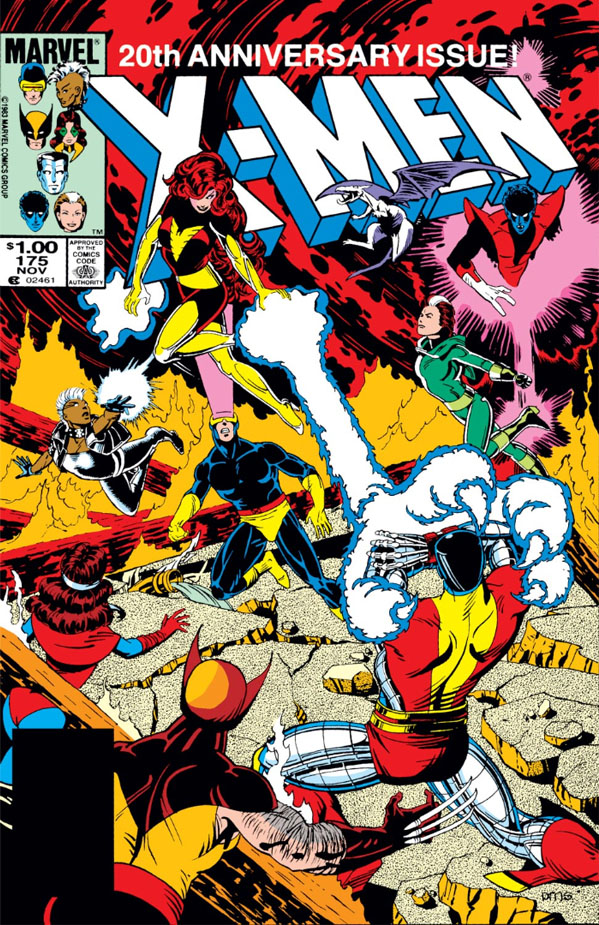
Welcome to Marvel's late 1980s period, where no Limited Series stone went unturned:
These particular four are only the
tip of the iceberg, as the concept went well beyond the '80s, but they give you a good idea of how Marvel was embracing the concept of the "limited series." Supplementing and often offering tie-ins with their regularly published host titles, they perhaps proved to be not only excellent marketing tools but sales successes in their own right. Readers were provided with a nice, compact adventure, knowing exactly when it would be wrapped up and not made to feel like they needed to invest time in the regular title in order to get a sense of what was going on; and since the various series were at times a grab-bag of characters from different titles (a feature the
Secret Wars limited series took to the, er, limit), they could broaden their appeal on the rack to a wider range of readership, as well as introduce readers to characters they might not otherwise plop down change to read. Think
Marvel Team-Up with more room and scope to work with.
So if Marvel could somehow devote the creative staff necessary to produce limited series on a semi-regular basis, the company could in essence increase its output of "new titles" and thus experience an increase in monthly sales (or at the very least, use the profits to make up for poor sales for any given month), without taking on the risk of sustaining a new regular monthly title featuring a concept or character that failed to catch on (of which I can think of no better example than the
New Universe stable of titles, also appearing during this period).
Though you can't help but wonder why a title's annual, "king-size special," having something of a similar concept--a self-contained story using sellable characters in a greater number of pages--often phoned in a story of poor quality, or, even worse, went to press with nothing but reprinted material. If staff came up short with only one story per title per year, how was Marvel going to maintain production of a number of limited series? Annuals were even a better deal for readers, price-wise--and there was only
one to buy, vs. an investment of several issues for a limited series. If quality wasn't up to par, limited series would develop a rep that would have readers shunning them across the board.
Yet with the exception of one, I very much enjoyed the series pictured above. Each had its good points; the stories managed to fill out the expanded format decently; and the creative teams, whatever their workloads on their other titles, stepped up to the plate and delivered some excellent product. Let's briefly touch on each.